
To tell the truth, it is never convenient when your car stops. Regardless of whether your car just got punctured on your way to a very important job interview, or whether it is some rattling noise that ends up costing you a fortune to fix, car emergencies always come as a surprise. The good news? Having the right savings cushion, you will be able to manage such surprises without ruining your budget or charging your credit cards.
So how much do you really need to reserve in case of vehicle emergencies? We will divide it and go step by step assisting you in making a plan that will apply in your case.
Understanding the Types of Vehicle Emergencies
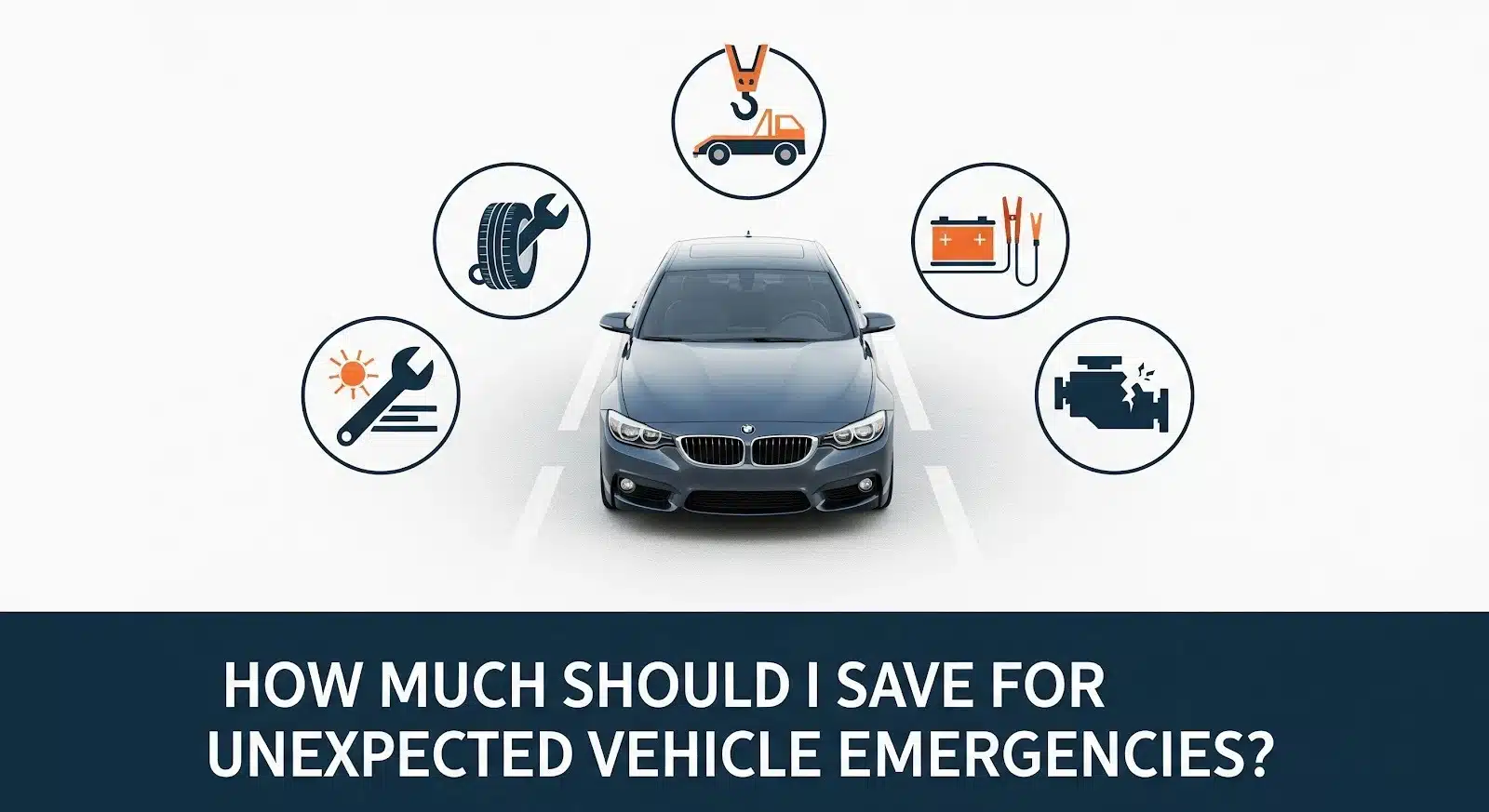
Before tallying up those numbers, let us consider the expenses expected. Car breakdowns usually are the result of one of a handful of common issues.
- Mechanical failures: It is likely that the first thing that occurs to mind is mechanical failures: engine problems, transmission, or a dead battery. These may vary between a few hundred dollars on simple repairs to several thousand on the major repairs.
- Accidents: Expenses to do with accidents can bring you even more to the ground. Although it is likely, even with insurance you will have to pay a deductible until your coverage takes effect; in addition, you may need rental car expenses as your car is being repaired.
- Tire issues: The issue of tires can be mentioned separately as it is very widespread. That may be $100-$200 to replace a tire, but the four? That bill adds up quickly.
- Towing and roadside assistance: It can also be stinging on towing and roadside assistance charges as they can be as high as $75-$150 or even higher depending on the distance.
The thing is that every several years the majority of car owners will encounter one of these cases. Being ready will ensure that you will not be scrambling when it comes.
The Magic Number: A Realistic Savings Target
This is what the financial experts would suggest most of the times: save at least one thousand to two thousand dollars specifically in case of vehicle emergencies. This is an adequate buffer in case of the majority of issues you are used to without being very large to achieve.
Why this range? As indicated by AAA the average cost of auto repair is approximately 500-600 dollars, yet a simple problem can easily surpass this mark at 1000 dollars. Putting aside money of at least 1, 000 dollars implies that you will be able to cover most of the unplanned repairs and do not panic. When you have a car that is older or one that is characterized by high price of repairs (I am referring to you, the European luxury cars), it is logical to lean towards the 2,000 side- or even higher.
As an example, the costs of bumper and fender damage alone may range between $500 and $1,500, and a specific fund will be essential. When you happen to require professional services of someone of the category of car collision repair, you will be thankful that you have such savings cushion.
Factors Which Affect your Target Amount
Not all people needs to save an equal amount. The personal target also should be contingent on a number of factors:
- The age and condition of your car counts. An emergency saving on a brand-new car wins a warranty is less in comparison to an old car of 10 years days with 150,000 miles on the odometer. The older cars wear and need more repairs which turn out to be more frequent and costly.
- Your insurance and deductibles. Suppose you have a collision coverage with a deductible of $1,000, you will wish you had that in your emergency fund. On the other hand, there is a chance that you may save less with a deductible of $250.
- Your driving habits. Do you drive 50 miles a day or just drive here and there on weekends? The longer the miles, the more wear and tear, which are converted into more repairs.
- Where you live. The urban areas that have a high labor rate will be paying a high cost of repairs compared to the rural mechanics. Find the average price of repairing whatever you have in the area to make a realistic target.
Building Your Vehicle Emergency Fund: Practical Steps
Alright, you are aware that you will have to save $1,000-$2,000, but how will you do it? The following are some of the practical strategies that can work:
- Begin small and grow continuously. Even $25 per paycheck adds up. Establish an automatic check clearing system between your checking and another savings account that is specifically dedicated to emergencies with your vehicle. You will not miss the money when you do not see it.
- Redirect windfalls. Get a tax refund, bonus at work or birthday cash? Set aside some part of it towards your car fund. Such unexpected increases can get you to your goal within a short time.
- Cut one small expense. How would you feel when you missed one meal at the restaurant each week and saved that $50? You would save one thousand dollars in five months. Find minor expenses that you do not need so badly.
- Earn extra income. Think of the side project or selling things that you no longer require. Pour that additional money directly to your vehicle emergency fund until you reach your goal.
In case you cannot strike a compromise between this savings goal and other financial needs, then a chat with a personal financial planner could make you develop a holistic plan that caters to all your requirements without feeling stressed out.
Maintaining Your Fund Over Time
Here is something important: it is a battle half-way to create the fund. When you have reached the amount of savings you have to keep it well maintained.
- Keep it apart from your daily expenditure money. Separate savings account one that is not linked to your debit card will help you lessen the urge to access your savings account to cover non-emergency situations.
- Replenish after use. You will need to use your vehicle emergency fund, which will occur, but you need to make it a priority to replenish it as quickly as possible. Continue those automatic transfers until you are back at your target amount.
- Reassess annually. Your car is aging, or your situation changes, and your emergency fund goal might have to be changed. Make an annual reminder to check your current savings and see whether they still make sense.
Beyond Savings: Other Ways to Prepare
Although a good savings fund is what saves the day, there are more tactics to be considered:
- Regular maintenance is key. It is a matter of fact that many emergencies do not occur at all due to regular maintenance. Tire rotations, fluid checkups, and oil changes may appear to be a cost today, but they are a savings in costs down the road.
- Warranties and service contracts. Other drivers can find the idea of long-time warranties or car service contracts reasonable, especially in case you have an older or maintenance-intensive car. Calculate the figures to determine whether the peace of mind is worth the price.
- Roadside assistance. AAA or your insurance company or even credit card benefits has roadside assistance programs that will help you to avoid unexpected towing bills.
Your Vehicle, Your Peace of Mind
At the end of the day, saving for vehicle emergencies isn’t really being pessimistic; it is more about being prepared. Life is unpredictable enough—why live in anticipation of having your back against the wall if your car gets malfunctioned?
Begin with what you have, no matter how small that amount is (as little as putting aside $20 this week). Any form of progress is good and with each dollar you save you are generating one step towards achieving true financial security and peace of mind.
What’s your next step? It could be the establishment of such an automatic transfer, opening a separate savings account, or just dedicating yourself to your saving target but take one step now. You will be glad when your future self (and your car) help you!